Why Turkey ?
Turkey is a modern country with a captivating blend of antiquities and contemporary sites. It is one of the fastest growing tourism destinations in the world, truly a fascinating fusion of East and West with its great cultural, historical and religious heritage.
Crystal clear waters, golden beaches, natural wonders, Greek, Roman and Ottoman ruins, religious sites, great shopping and entertainment options, not to forget World Heritage sites and more… Turkey offers a fantastic getaway for every taste.
HIGHLIGHTS
ISTANBUL
World Heritage Site (Old Town-1985)
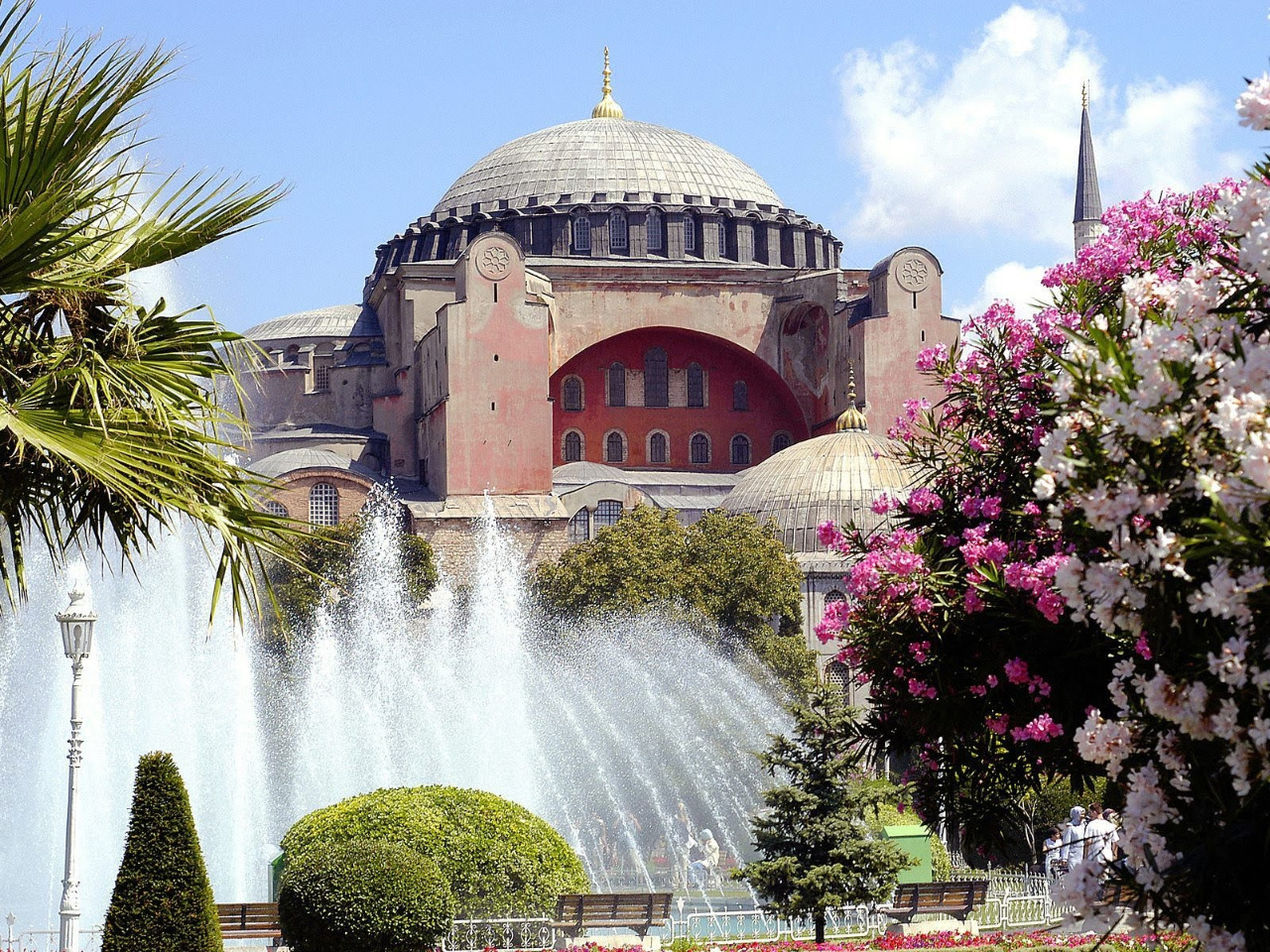
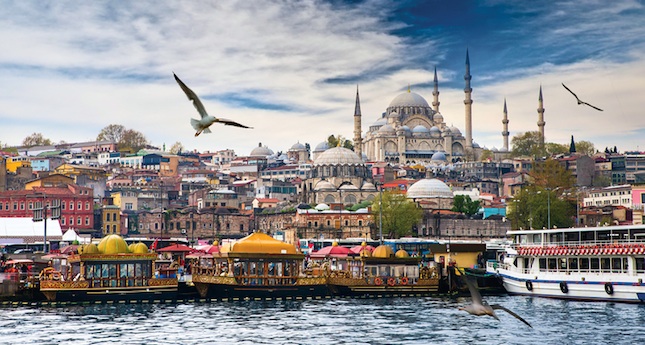
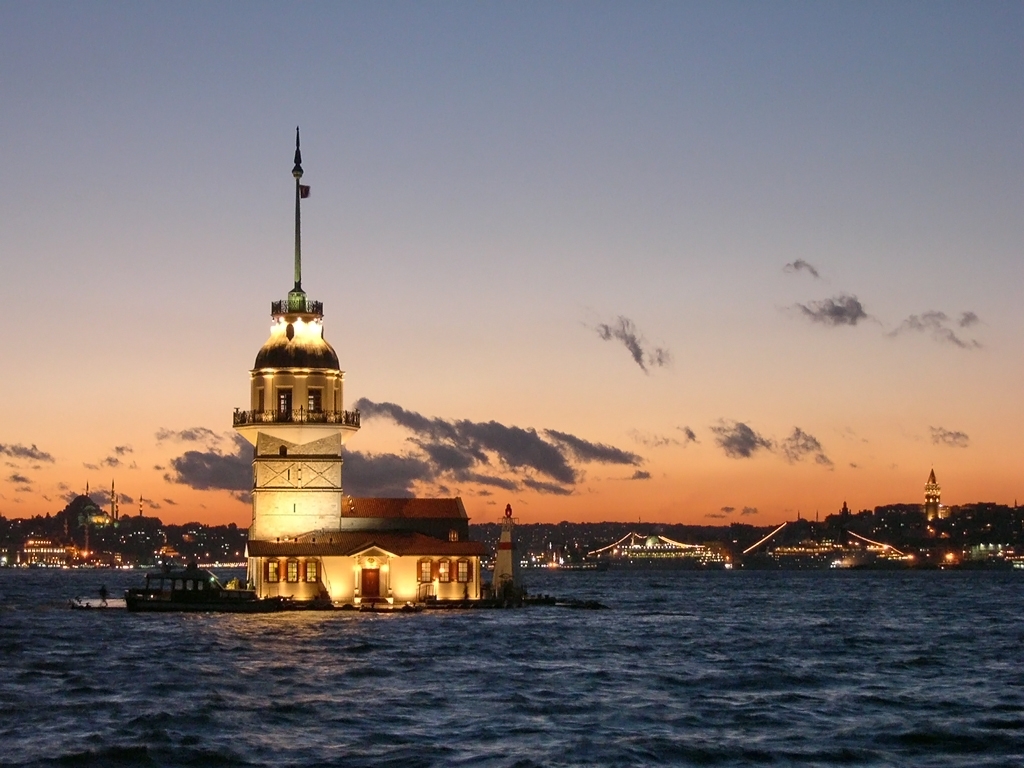
The only city in the world that stands upon two continents. The meeting point of Orient and Occident where contemporary way of life exist together with tradition in perfect harmony. This vast metropolis with colorful back alleys and vibrant buzzing markets, embrace amazing UNESCO sites like the Topkapi Palace, Blue Mosque, Hagia Sophia and the Underground Cistern.
Alternatively the city offers a great variety of shopping delights with oriental bazaars, fancy streets as well as entertainment with live band hangouts, posh clubs, night eateries and night cruises.
CAPPADOCIA
World Heritage Site (1985)
Biblical (St. Basil the Great, Christianity and Monasticism)
Iconic fairy chimneys, early Christian era cave churches, mysterious underground cities and hot air balloon marvels. An other-worldly planet created by volcanic eruptions followed by a dramatic erosive process of the nature. For ages, men have dug as well into this soft but firm tuff to create dwellings and monasteries. This fairytale region in central Anatolia is an open air museum of UNESCO- protected villages dating back to the 8th century B.C. The region bears a great significance regarding the penetration of Christianity in Anatolia. Early Christian hermits seeking a life of solitude and the Christians escaping from the persecution came to settle in natural grottoes of the region which enabled the rapid development of the Christianity and monasticism in the area. The Goreme Open Air Museum with its collection of the 12th -century cave churches decorated with beautiful frescoes is a must see together with labyrinthine Kaymakli Underground City. Hot air balloon ride at sunrise, jeep safari in lunar landscape valleys or a river side trekking are favored activities.
PAMUKKALE, Hierapolis
World Heritage Site (1988)
Biblical (St Philip, Seven Churches of Revelation-Laodicea)
Meaning “Cotton Castle” in Turkish, Pamukkale exhibits a unique landscape of terraces made out of calcium carbonate, a sedimentary rock deposited by cascading waters with a high mineral content. Its phenomenal natural beauties and thermal waters with curative properties have always made it a fashionable place of settlement for centuries. Once was an ancient Greek city rebuilt by the kings of Pergamon, the adjacent ruins of Hierapolis are well worth exploring as well. The theatre with a breathtaking view and the well preserved extensive necropolis demonstrate signs of a great prosperity in bygone history.
EPHESUS
World Heritage Site (2015)
Biblical (Seven Churches of Revelation, St Paul, St John’s Basilica, Virgin Mary’s House)
Seven Wonders of Ancient World (Temple Of Artemis)
One of the leading Greco-Roman cities of the world, Ephesus was an ancient commercial port which linked the great cities of the West to the prosperous lands of the East. Founded by Greek colonies in the 11th century B.C., Ephesus had always been the cradle of civilizations from both cultural and social points of view. Although having such a comprehensive past, current ruins date back to the Roman period. Among the most significant ruins are the Celcius library, the third largest of its day and the 24,000 capacity theatre, still used as a dramatic concert hall that hosted celebrities such as Joan Baez, Eric Clapton, Elton John and Ray Charles. Apart from being one of the 7 churches of Revelation, its historical value is consolidated as a prominent missionary center visited by St. Paul and St. John, as well as the place where the Virgin Mary is believed to have spent her last years.
ANTALYA
Antalya is one of the Turkey’s largest and most visited cities by tourists thanks to its wealth of historical sites, natural beauties and location that serves as a convenient gateway to the Turkish Riviera. Situated at the Gulf of Antalya, this tourism hub exposes classical charm and stylish modern in an appealing harmony. The town rises around a splendid Roman-era harbor by the Mediterranean Sea presenting breathtaking clifftop views of hazy blue waters with mountain silhouettes. At its core, lies beautifully protected old-city district of Kaleici which offers ambiance accommodation in finely refurbished Ottoman houses on its mazy lanes, extending to the 2 nd century Hadrian Gate. Neighboring Pamphylian cities of Aspendos, Perge and its comprehensive archeological museum acknowledge that the city preserves its cultural heritage while keeping up with the latest trends in the tourism sector.
.
PERGAMON
World Heritage Site ( 2014)
Biblical ( Seven Churches Of Revelation )
This dazzling natural fortress of ancient times is probably the only Hellenistic city in the world about which we know a fair amount.
Pergamon is crucial to understand the sophistication of ideas and traditions concerning art, architecture, education, religion and medicine of the Hellenistic world. Such complexity enabled the invention of parchment paper and creation of colossal communal buildings like the second largest library in the ancient world, the altar of Zeus and the temple of Trajan. The nearby ruins of once reputable Hellenistic and Roman healing center of Asclepion is a vital witness of advanced medical practice in the city as well.
BODRUM
Seven Wonders of the Ancient World (Mausoleum of Halicarnassus)
The crown jewel of the Turkish Riviera and the sea sand sun holiday located on the southwest coast which was described as ‘land of eternal blue’ by Homeros. Renowned for its typical whitewashed buildings surrounded by green landscape and turquoise waters, it has been a touristic heaven for last 40 years. Once called Halicarnassus, the town was home to the Mausoleum of Mausolus, one of the Seven Wonders of the Ancient World. Its imposing castle built by Knights of St John, houses the Museum of Underwater Archaeology that displays a fascinating trip through the world of ancient mariners.
GALLIPOLI & TROY
World Heritage Site (1998, Troy)
Gallipoli is the name of a 100 km long peninsula lying on the European side of the Dardanelles Strait where the epic fight between Turks and Commonwealth forces was held at the beginning of the First World War. Today, the battlefields host thousands of Australians and New Zealanders for commemoration ceremonies every year. Across the peninsula, lie the ruins of the glorious city of Priam, Troy, that resisted Agamemnon’s army of tens of thousands for years and where once, the legendary heroes Hector and Achilles had their celebrated duel. The myths, the history, the discoveries of Heinrich Schliemann and his successors have not been able to reveal all the mysteries of Troy yet.
AFRODISIAS
World Heritage Site (2017)
Aphrodisias truly is a site to behold, considered as Florence of ancient times, an intellectual and spiritual capital of Roman Caria.
For centuries the city appeared to have been no more than a shrine, dedicated to the Mesopotamian goddess of love, beauty and war, Ishtar who has been associated with Aphrodite through the Greek and the Roman era. This unique imperishable cult image created in Aphrodisias continued its reign till the 6th century, two hundred more years after Christianity was adopted as the official religion of the Empire. The existence of rich quarries of high quality white and blue gray marble around the city triggered the production of marble sculpture and architecture. The work and the skill of the sculptors of Aphrodisias gained a great reputation in the Roman world which became unrivalled in this field. One of the best preserved stadiums of the ancient world world, a splendid theater bath complex, temple of Aphrodite and the monumental gateway of Tetrapylon make this site far superior than most of its counterparts.
GOBEKLI TEPE
World Heritage Site (2018)
Gobeklitepe which predates the Egyptian Pyramids by seven thousand and Stonehenge of England by six thousand years, is one of the most revolutionary discoveries of archaeology in our era. It is located in upper Mesopotamia, a region that witnessed the appearance of the most ancient farming communities in the world.
The site, believed to have been the oldest man-made sanctuary of ritual significance, is noted for its massive carved stones of 5 to 10 tons, dating back to 10th millennium BC. The scale, the craftsmanship and three-dimensional features on the structure and the pillars are signs of a great sophistication of the hunter-gatherers of the early Neolithic period when people had not yet developed metal tools or even pottery. Gobeklitepe redefines the zero point of human history and civilization, contradicting what we used to know about prehistory.
UNIQUE EXPERIENCES AND TASTES
BOSPHORUS CRUISE
The natural marvel of Istanbul where Jason and Argonauts sailed through in search of Golden Fleece and where beautiful Io swam across disguising as a heifer to escape the wrath of Hera.
No doubt, one of the unique activities of Istanbul is a boat tour along the European and Asiatic shores of Bosphorus. Just sit back and relax, let the history, mythology, picturesque landscape with Ottoman palaces, fortresses and wooden mansions called yali carry you away in your private chartered boat…
HOT AIR BALLOON
Let your dreams take a flight.
The hot air balloon ride in Cappadocia contains all the features necessary for the expression of its “once in a life time experience”.
Floating in the air by sunrise over the mind-blowing lunar landscape valleys could only be possible in one’s dreams.
Turkey’s Pamukkale region, where nature and history mingle perfectly, is also among the top listed balloon destinations in the world.
TURKISH BATH (HAMAM) EXPERIENCE
Inspired by Roman bathing practices, Turkish Baths, locally referred to as Hamam, were a source of both social gatherings and hygiene maintenance.
If what you need is a break for a moment and get yourself refreshed, then there is nothing more relaxing and nostalgic than a Turkish Bath. The traditional way of exfoliation followed by bubble wash and massage will rejuvenate your body and soul.
BLUE VOYAGE ON A GULET
A splendid way of “chill out on the deck” along the heavenly Mediterranean and Aegean Coasts of Turkey by the country’s peculiar luxury wooden yachts called Gulet. From May through October, either before or after your land tour, from three up to seven days, you may explore the hidden gems of secluded bays and beaches of the turquoise coast. Swimming in the crystal clear waters, witnessing spectacular natural beauties combined with timeless history and charming villages, Blue Voyage, offers an unforgettable Turkey adventure.
TRADITIONAL ARTS AND CRAFTS
Turkish culture and arts are characterized by layers of complexity developed by absorbing the artistic traditions of conquered lands and adapting them with the great cumulative cultural heritage of Anatolia.
First examples were handicrafts which have been gradually improved and modified depending on environmental conditions, eventually becoming traditional and accepted as an art that reflects the artistic sense, feelings and cultural characteristics of Turks.
ANATOLIAN RUGS
“…and here they make the most beautiful silks and carpets in the world, and with the most beautiful colors”.
13th C, Marco Polo
The art of weaving represents a traditional craft dating back to early times of Turkish history. Based on the necessity of a nomadic existence, carpets had more practical functions such as warmth, protection and cleanliness. As Turkish tribes migrated and integrated, designs, symbols and techniques travelled over the borders and became more sophisticated. Once Turks settled in Anatolia, incorporating artistic and decorative features from the Romans, Persians, Jews, Christians and Europeans paved the way for a great deal of artistic progress in Anatolian Rugs which turned out to be the biggest contribution of Turks to Renaissance Art.
IZNIK TILES
“….spectacular harmony of paste-quartz-glaze”.
By the beginning of second millennium, the Byzantine art featured elaborate decorations using luxury items like gold and silver in their royal and religious interiors while Islam and Turkish traditions rather appreciated less pretentious items such as ceramics, woodcarvings and inlays. Additionally, restrictions of human and animal forms of Islam in religious buildings, channeled Turkish decorative arts into alternative features such as flowers, geometric forms and calligraphy.
It was initially the Seljuk Turks who introduced the use of glazed bricks and tiles in interiors while the Ottomans raised it up to a superior level by developing production centers in Iznik and Kutahya. Especially the discovery of blending quartz into the tiles, enabled Ottomans to create exceptional pieces which could be observed today at the Louvre in Paris, the Metropolitan Museum in New York, Vitoria &Albert Museum in London.
MARBLING, EBRU
Ebru or paper marbling, is a distinctive traditional Turkish book art of creating colorful patterns by sprinkling and brushing color pigments into a shallow pan of oily water and then transferring it on to a sheet of paper or fabric. Ebru, a Unesco-heritage listed art, was primarily used for decorating imperial decrees and correspondence, calligraphic pieces and book covers. Nowadays innovative artists adorn woodwork, fabrics and plastic with enchanting forms of marbling art.
TASTING WINE, RAKI & MEZE
Having a history of viniculture for almost five thousand years, Anatolia is likely to have been one of the earliest wine producing regions of the world. Although Turkey is the home of literally thousand indigenous varieties of grapes, the ones cultivated for commercial reasons are no more than 60. Surprisingly but proudly some of the local wines have had their names internationally rewarded and offer excellent choices of flavors.
Savoring the Turkish meze with a glass of raki, the anise-flavored liquor of Turks, presents a surreal local culinary experience.
A meze can be anything that goes well with Raki, usually served in small plates; herbs with yogurt and garlic, pickles, feta cheese and melon, olive oil-based vegetable dishes such as stuffed grape or cabbage leaves, artichokes, celery and charred eggplant. Marinated fish, octopus salad, steamed shrimps served cold with olive oil, pilaki (tomato sauce and olive oil-braised navy beans), mashed fava beans served with onions and olive oil, fried eggplants and zucchini with tomato sauce are just some of the meze delicacies.
TURKISH CLASSICS, THE DESSERTS
Kunefe is a chewy classic, made of finely shredded dough with a layer of soft white cheese in the middle that makes it crispy on the outside but soft and creamy on the inside. It is served hot from the oven so the cheese remains stringy.
Baklava is made of layers of filo dough filled with chopped walnuts or pistachios and soaked in syrup or honey. Just like other syrupy Turkish desserts, the crunchy feel makes this Turkish classic a textural wonder.
Tavuk Gogsu is a Turkish milk pudding sprinkled with a pinch of cinnamon. It contains chicken meat that is washed several times and finely shredded. But it loses its smell and taste and gives the dessert a stretchy texture in the course of preparation